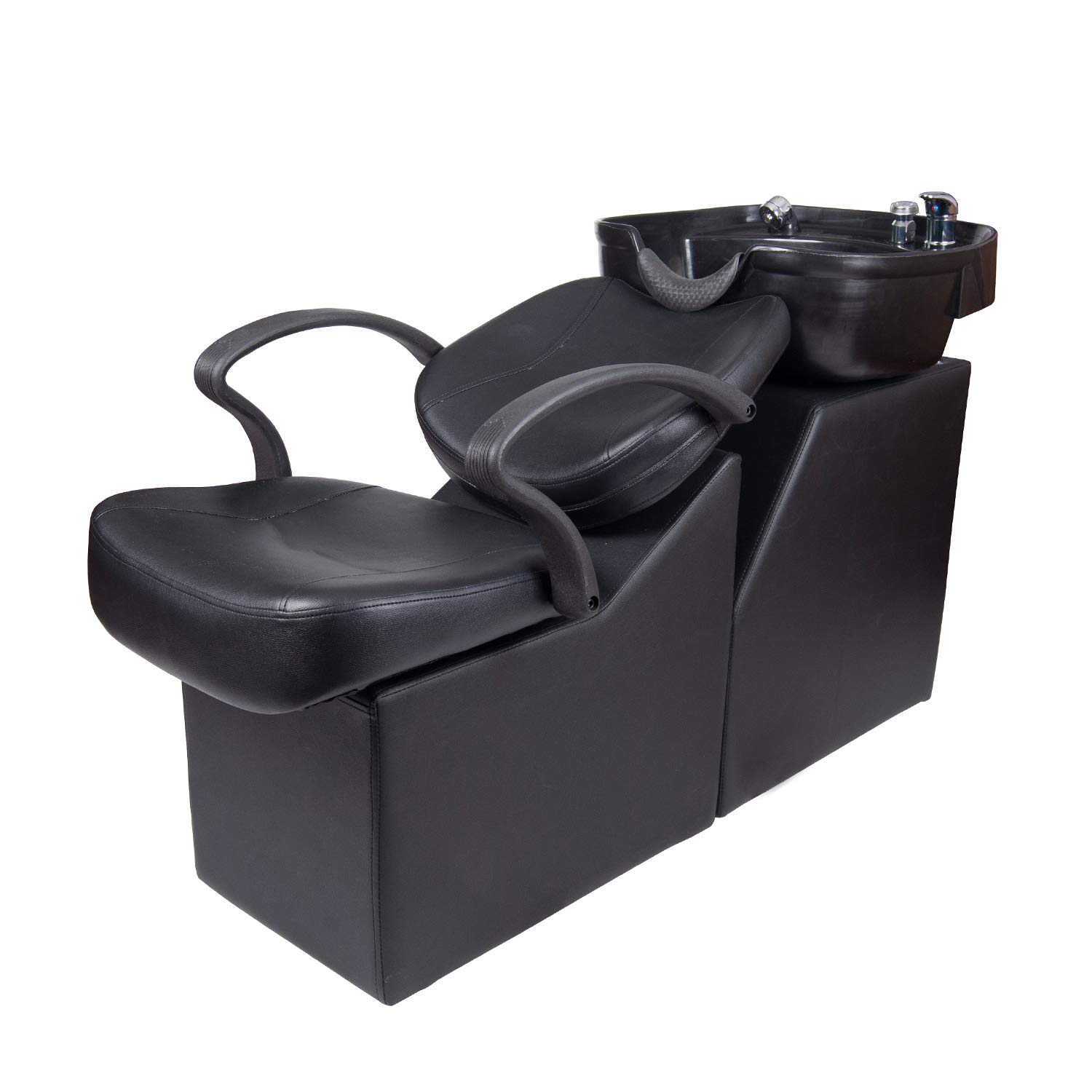
If you’ve been pricing out your shampoo station — the sink-and-chair setup where clients lean back for a wash — you’ve probably noticed a confusing range: units that look almost identical can run anywhere from $180 to over $2,000. A shampoo bowl is the basin itself (ceramic, acrylic, or plastic) that connects to your plumbing. A shampoo chair (also called a backwash chair) is the reclining seat attached to or paired with that bowl, designed so a client’s neck rests comfortably over the basin while you work. Together, a bowl-and-chair combo is the workhorse of every wet service — color rinses, conditioning treatments, scalp work. In the mid-range bracket, roughly $200 to $500, you’re not buying luxury furniture. You’re buying functional infrastructure. This guide is about making that bracket work for you: what to actually evaluate, which units operators are consistently pointing to, and the math that tells you whether a $350 combo makes business sense for your volume.
What “Mid-Range” Really Buys You in 2026
The $200–$500 window sits between the cheapest import combos (under $200, predominantly thin-gauge plastic bowls with fixed chairs and minimal warranty coverage) and the entry point for commercial-grade name brands like Pibbs, Kaemark, or Belvedere (typically $700 and up for the chair alone). Understanding what that middle bracket delivers — and doesn’t — is the core decision frame here.
What you reliably get in this range:
- Ceramic or heavy-duty ABS bowls rated for continuous professional use
- Reclining chairs with hydraulic or tilting mechanisms (not fixed-position)
- Adjustable neck rest (critical for client comfort and injury prevention)
- Standard plumbing connections compatible with most U.S. salon rough-in setups
- Manufacturer warranties ranging from 90 days to one year on parts
What you’re trading away vs. the $700+ tier:
- Base chair mechanisms: mid-range hydraulic cylinders are rated for lighter load cycles; operators in long-run reviews consistently note that high-volume salons (10+ shampoo services per day) start seeing hydraulic drift after 18–24 months in this bracket
- Upholstery grade: the vinyl at this price point is typically 1.5–2.0mm weight versus the 3.0mm commercial-grade found on Belvedere or Takara Belmont units — it survives regular use but is more vulnerable to chemical exposure from color rinses and relaxers
- Bowl depth and drain speed: commercial ceramic bowls in the premium tier are designed for faster drain cycles; mid-range units are adequate but operators report occasional slow-drain issues with heavy-use schedules
None of those tradeoffs are dealbreakers for the right buyer. The question is whether your service volume and chemical menu match this tier.
By the Numbers: Mid-Range Shampoo Station Economics
| Metric | Mid-Range Combo ($200–$500) | Commercial Grade ($700–$1,500+) |
|---|---|---|
| Typical warranty | 90 days – 1 year | 1–3 years |
| Hydraulic rated cycle life | Light–moderate (est. 5–8 services/day) | Heavy (10–20+ services/day) |
| Upholstery vinyl weight | 1.5–2.0mm | 2.5–3.0mm+ |
| Expected replacement interval | 3–5 years at moderate volume | 7–12+ years |
| Break-even at $15 shampoo service | ~14–34 services | ~47–100 services |
Rates estimated from manufacturer spec sheets and operator cost breakdowns cited in Salon Today Magazine’s 2024 equipment feature.
The break-even math here is worth pausing on. At a $15 shampoo charge (a reasonable minimum for a standalone wet service or the implicit wet-service component bundled into color and cut appointments), a $350 mid-range combo pays for itself in roughly 24 services. At two shampoo services per day, five days a week, that’s less than three weeks. The real question is longevity — and that’s where volume honesty matters.
The Units Operators Are Actually Buying
This section covers the models that keep appearing in purchasing conversations on professional beauty forums, in equipment reviews published by Modern Salon and Beauty Launch Pad, and in the product mix stocked by authorized distributors like SalonCentric and CosmoProf. These are not obscure imports — they’re accessible, stocked domestically, and have enough purchase history to generate meaningful operator feedback.
Pibbs 5209 Shampoo Bowl and Chair Combo
Pibbs is one of the most-cited mid-range brands in the professional salon channel — it appears regularly in American Salon’s equipment roundups and is stocked through authorized distributors rather than through gray-market channels, which matters for warranty claims. The 5209 combo sits at approximately $380–$440 depending on the distributor and current stock.
Operators consistently report solid bowl depth and a neck rest that accommodates a wider range of client heights than many competitors in this price tier. The chair’s reclining mechanism is manual rather than hydraulic — that’s a deliberate tradeoff Pibbs makes to keep maintenance costs near zero at the cost of the smooth one-touch hydraulic feel. For a solo booth renter doing 4–6 wet services per day, that tradeoff is widely rated as the right call.
The upholstery comes in a range of colors, which matters more than it sounds: matching your station’s existing vinyl is easier here than with brands that offer only black or white. Chemical resistance on the vinyl is rated for standard salon use; operators who run heavy bleach or relaxer services note they’re more vigilant about wiping down between clients.
Icarus (by Veeco) Backwash Unit
Veeco is a U.S.-based distributor with a long presence in the professional salon supply channel — their Icarus line is authorized through SalonCentric and several regional distributors. The Icarus backwash unit in the $300–$420 range is a consistent recommendation from stylists equipping first stations, cited in Beauty Launch Pad’s 2024 suite-outfitting feature as a practical choice for booth renters prioritizing setup speed.
The ceramic bowl on the Icarus unit is one of the functional differentiators at this price point — ceramic is easier to clean, more resistant to staining from color and toner, and generally more durable than ABS plastic over a multi-year horizon. The chair mechanism is a tilt-back rather than full hydraulic recline, which some operators prefer for its simplicity and others find limiting for clients with mobility considerations.
Plumbing connections are standard U.S. sizing, and operators report straightforward installation without custom fittings. If you’re in a suite where your landlord controls plumbing access, compatibility with standard rough-ins matters — this unit clears that bar cleanly.
Takara Belmont — What the Premium Anchor Looks Like (for Reference)
Including Takara Belmont here is deliberate, even though their backwash units start around $1,200–$2,500 and sit well above this guide’s bracket. Per American Salon’s coverage of the 2025 salon equipment market, Takara Belmont remains the brand-name anchor that operators use to calibrate value across the price ladder. When booth renters describe what they’re working toward, it’s usually a Takara Belmont unit. Understanding what the premium tier delivers — smoother hydraulics, heavier commercial upholstery, longer warranty coverage, and brand cachet that affects client perception — helps you evaluate whether the gap justifies the current investment or whether a mid-range unit bridges you to the revenue level that makes the upgrade viable.
The honest framing from Salon Today Magazine’s 2024 equipment feature: for a stylist doing under 8 wet services daily, the functional performance gap between a well-chosen mid-range unit and a Takara Belmont is narrower than the price gap. The premium matters most at high volume and in salons where the equipment itself is part of the client experience positioning.
The Tradeoffs Worth Naming Explicitly
Hydraulic vs. manual recline: Hydraulic backwash chairs feel smoother and require less physical effort from the stylist, which accumulates over a full day of services. Manual tilt mechanisms are simpler, cheaper to maintain, and have fewer failure points. If you’re solo and doing moderate volume, manual is defensible. If you’re building a multi-chair setup and hiring associates, hydraulic chairs reduce operator fatigue complaints and tend to last longer under inconsistent handling.
Ceramic bowl vs. ABS plastic: Ceramic is heavier (relevant if your suite has floor load considerations or you need to move equipment), more expensive to replace if cracked, but dramatically more durable and stain-resistant over time. ABS plastic bowls are lighter and less expensive up front; operators consistently report that plastic bowls show color staining within 12–18 months under regular professional use. At the $350+ price point, prioritize ceramic if the option exists.
Combo purchase vs. separate bowl and chair: Buying a combo unit from a single manufacturer simplifies installation and warranty claims. Mixing a third-party bowl with a third-party chair can save $50–$100 but creates ambiguity when something fails — each manufacturer points to the other. For a first station, the administrative simplicity of a combo purchase is worth the minor cost premium.
Gray market risk: This deserves a direct mention because it costs operators money. Units sold through non-authorized channels — which can include some marketplace listings — often come without manufacturer warranty support and may be configured for non-U.S. plumbing standards. Beauty Launch Pad’s suite-outfitting guidance specifically flags this: always verify that your distributor is on the manufacturer’s authorized dealer list before purchasing equipment you expect to warranty. SalonCentric and CosmoProf are reliable authorized channels for the brands named in this guide.
Decision Rules: If X, Then Y
Here’s the framework based on the patterns across operator reviews and industry coverage:
If you’re a solo booth renter doing 4–6 wet services per day and your primary concern is getting a functional, maintainable unit without overextending capital: the Pibbs 5209 or Icarus backwash unit in the $350–$440 range is the peer-recommended choice. Both have the distribution footprint and operator history to make warranty claims workable.
If you’re outfitting 2–4 chairs and wet services are a significant revenue line (color services, treatment programs, extension work): the mid-range bracket is a bridging play, not a long-term solution. Budget mid-range for now with a concrete plan to replace at the 3-year mark, or extend your initial capital budget to the Pibbs 5920 or comparable commercial-grade unit in the $600–$900 range.
If your service menu includes heavy chemical services (bleach, relaxers, keratin): prioritize ceramic bowl and heavier-gauge vinyl regardless of price tier. The cost of replacing a stained or deteriorating unit in year two exceeds the upfront cost difference between plastic and ceramic at purchase.
If client experience positioning is part of your brand: be honest with yourself about what a $350 combo signals in a $100+ service environment. It functions. It won’t embarrass you. But there’s a visual gap between a mid-range unit and a commercial-grade backwash station that attentive clients notice. Plan the upgrade cycle accordingly.
The mid-range shampoo station bracket is genuinely viable for a wide range of operators — it’s not a compromise you’ll regret if you go in with clear eyes about volume, service chemistry, and replacement timeline. The operators who get burned are the ones who buy at this tier expecting commercial-grade longevity at every intensity level. Match the equipment to the actual workload, verify your dealer is authorized, and run the break-even math before the purchase. That’s the whole framework.